Why 2026's Funniest Shows Are Basically Designed to Be Ignored
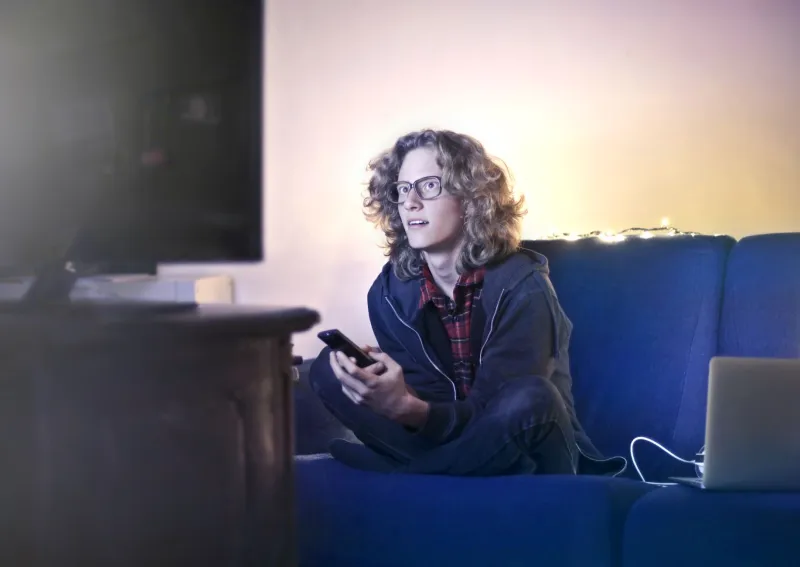
There's a specific sound 2026's biggest comedy makes: someone talking in the next room while you're texting. That's not a failure of attention. That's the design.
Spend a few weeks actually watching what's charting right now and the pattern gets loud. The breakout comedies of the year are shorter than the sitcoms we grew up on, they front-load the joke before the credits, and they build scenes that work perfectly well when you look up for eight seconds and go back down. We've spent the year calling this "background TV" like it's an insult. It's a brief.
The 22-minute episode is not an accident
Look at any top-five comedy on the streaming charts this fall and the runtime tells a story. Episodes are landing in the low twenties, sometimes under twenty, and the credits roll before you've finished deciding whether you liked it. Meanwhile, the network half-hour still has to fit a cold open, four acts, and a tag—which, once you subtract the ads, leaves less story time than a TikTok series.
The shorter episode isn't just a trim. It changes what gets written. There's no room for the subplot that exists only to give the B-plot a place to live. Jokes have to land in the first six seconds of the scene or the scene doesn't exist. Exposition gets shaved down to a shrug and a line of dialogue that sounds like something a person would actually say.
Ambient TV became a design brief
Here's the thing the industry figured out this year: nobody watches anything alone anymore. Not emotionally—physically. There's a phone in the hand. There's a laptop open. There's a partner asking whether you've seen the thing they're holding up on a screen of their own.
The shows that broke out in 2026 responded by making themselves resilient. Dialogue is crisp and unstuffed. Characters say each other's names more than real people do, so you can catch up in a second. Scenes have audio signatures—a specific ringtone, a running bit, a rhythm you can recognize from the kitchen. It's the opposite of prestige-TV mumblecore, which demands a dark room and total silence and has been quietly losing the culture war for years.
Is that cynical? Maybe. It's also how a lot of us actually consume TV now, and pretending otherwise is how you end up with a brilliant show nobody finishes.
The laugh track didn't come back—it just changed jobs
Traditional sitcoms always had a built-in attention cue: the laugh. Miss the joke? The audience told you where it was. Streaming comedy killed the laugh track and then spent a decade trying to figure out what replaces it. In 2026 the answer arrived—the reaction is now social, not audible.
Which is why the clip economy matters so much. The most-shared comedy moments this year aren't punchlines. They're reactions, line readings, a seven-second stare that becomes a quote tweet. Shows are being written with one eye on the moment that will travel, and honestly? It's making the first four minutes of a pilot sharper than the entire last decade of network comedy pilots.
The part where the 30-minute network sitcom loses
The classic broadcast half-hour hasn't died. It's just become a regional dialect. It still works for a certain kind of show—the broadly appealing family comedy, the one that plays at 8 p.m. in a hotel room in Ohio and translates fine. But the cultural conversation, the clips, the group chats, the merch drops? That energy moved. It moved to shows that don't have to write around commercial breaks and don't have to explain themselves to a standards department.
What the broadcast model still has is volume: 22 episodes a year, which builds a kind of intimacy streaming's eight-episode seasons can't buy. That's a real advantage, and it's why old sitcoms from the 90s and 2000s are still climbing the streaming charts every single week. Comfort rewatch is undefeated.
But notice what those old shows share with the new ones: they're repeatable. They're low-stakes. You can start anywhere. The sitcom was always the most interruption-friendly form on television—we just spent fifteen years making sitcoms that demanded your full attention and then got mad when you didn't give it.
What we lose, and what we actually gain
The honest cost of the 22-minute era is that fewer shows get to be weird for a whole episode. The bottle episode, the slow character study, the one where nothing happens and everything changes—those need slack in the runtime, and slack is exactly what's being cut.
The gain is that comedy is funny again on a first watch, in a loud room, with half your brain elsewhere. That sounds like a low bar. For a few years there, it really wasn't being cleared.
So no, we're not mourning the 30-minute sitcom. We're watching it split into two species: the thing you put on at dinner, and the thing you save for the good couch. Both can live. Only one of them is going to get screenshotted.